Technical Spotlight - Scuderia Ferrari HP
Ferrari SF-26 – Early Poster Child of the New Era
Ferrari was among the first teams to unveil their 2026 challenger, and provided excitement during their launch, not just because it is Lewis Hamilton’s first real Ferrari, but also because it was one of the earliest complete 2026 cars on display. The following sections break down the visual and mechanical elements of the SF-26.
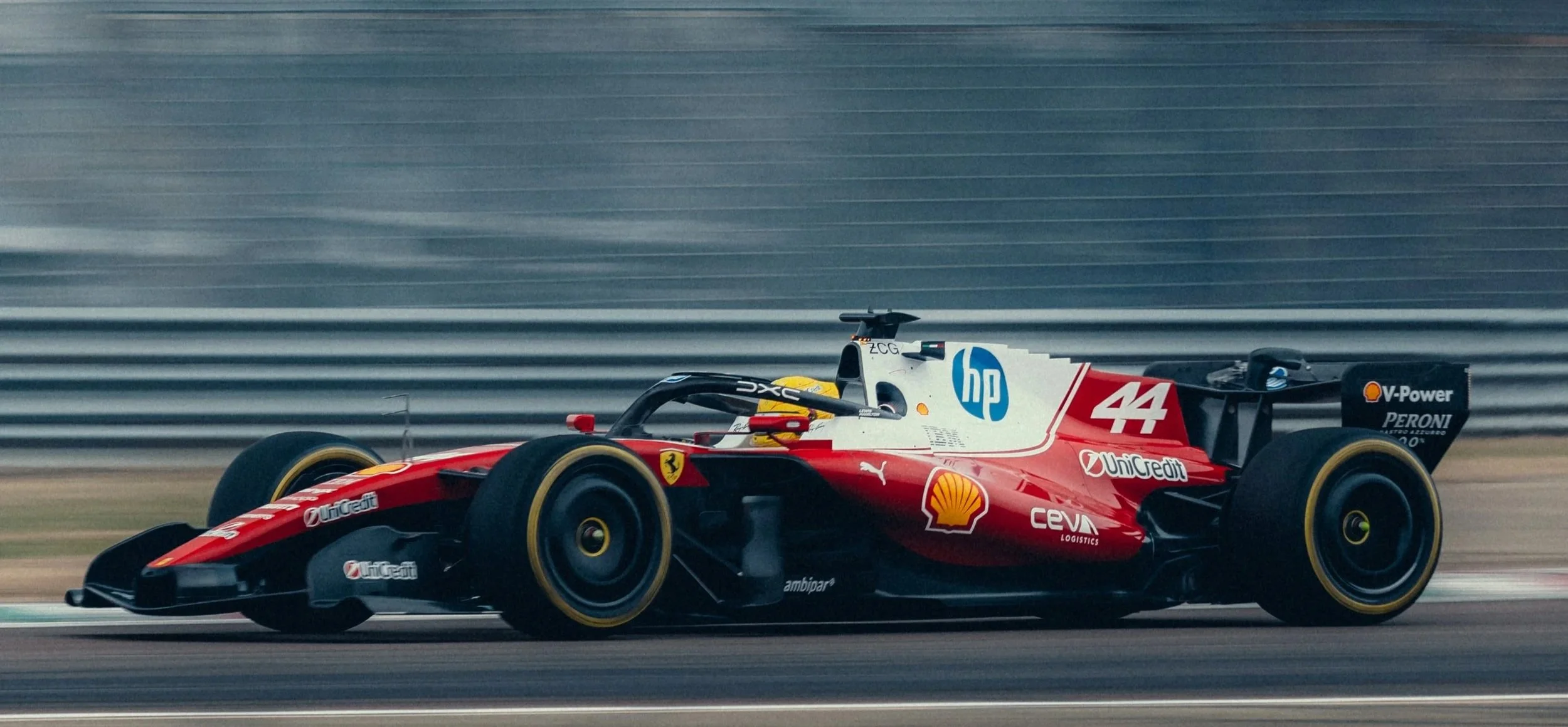
Sir Lewis Hamilton Driving the SF-26 at the Fiorano Shakedown
Livery and Component Packaging
The SF-26 combines a glossy bright red with quite some white around the pilot cockpit and engine cover, perhaps showcasing a visual renewal. The sidepods, engine cover, and cooling inlets are closely packaged together, signalling a renewed and more compact hybrid setup. Moreover, out of all the teams, Ferrari seems to have shrunk the engine air intake near the roll-hoop the most, which signals a compact and efficient design regarding the layout of the PU components, and cooling elements. But we will go into more detail later on.
Suspension and Platform
Both front and rear suspensions have adopted a push-rod setup, which is a significant change from previous iterations. Ferrari decided to migrate to a pull-rod setup in 2025, a move questioned by many, given that a new regulation change was on the horizon, and also because now, a year after they reverted their setup. The advantage of push-rod setups is evident in these new regulations. It allows for a neater aero iteration of suspension rods, while providing a simpler package inside the car, which allows greater access to internal components for mechanics and eases making adjustments in ride-heights.
Furthermore, this package is more beneficial for anti-dive setups, leading to more stable aero performance on track. Anti-dive is the method of avoiding major “diving” movements carried out by the car under heavy, longitudinal deceleration. As the car stays more level during such events, it ensures more consistent and higher downforce levels, reduces fluctuations in tyre load and improves driver confidence under braking. Better tyre contact with the asphalt means more grip, and more grip equals better braking performance.
Aerodynamic Philosophy
Early analyses of the car show us that wing profiles and geometries are relatively “clean”, which aims to support major balance changes between downforce modes. In analyses provided by Craig Scarborough, he explains how the Ferrari seems to strive for an overall balance, minimising yaw and side movements when the active aero is altered. As I have pointed out before, and is crucial to note, out of all cars revealed, Ferrari has by far the smallest air intake at the roll hoop.
The way that PUs are packaged with these new regulations, it is expected that the main centre inlet will provide most cooling to electrical components, while the sidepod inlets provide cooling for the ICE. The smaller inlet, of course, provides less drag, which is always beneficial. So, these initial elements show us that Ferrari probably managed to neatly package the PU that enabled them to continue with such a design. Interesting to note as well, they do have other smaller inlets (see image below) which is not that easy to spot at first.
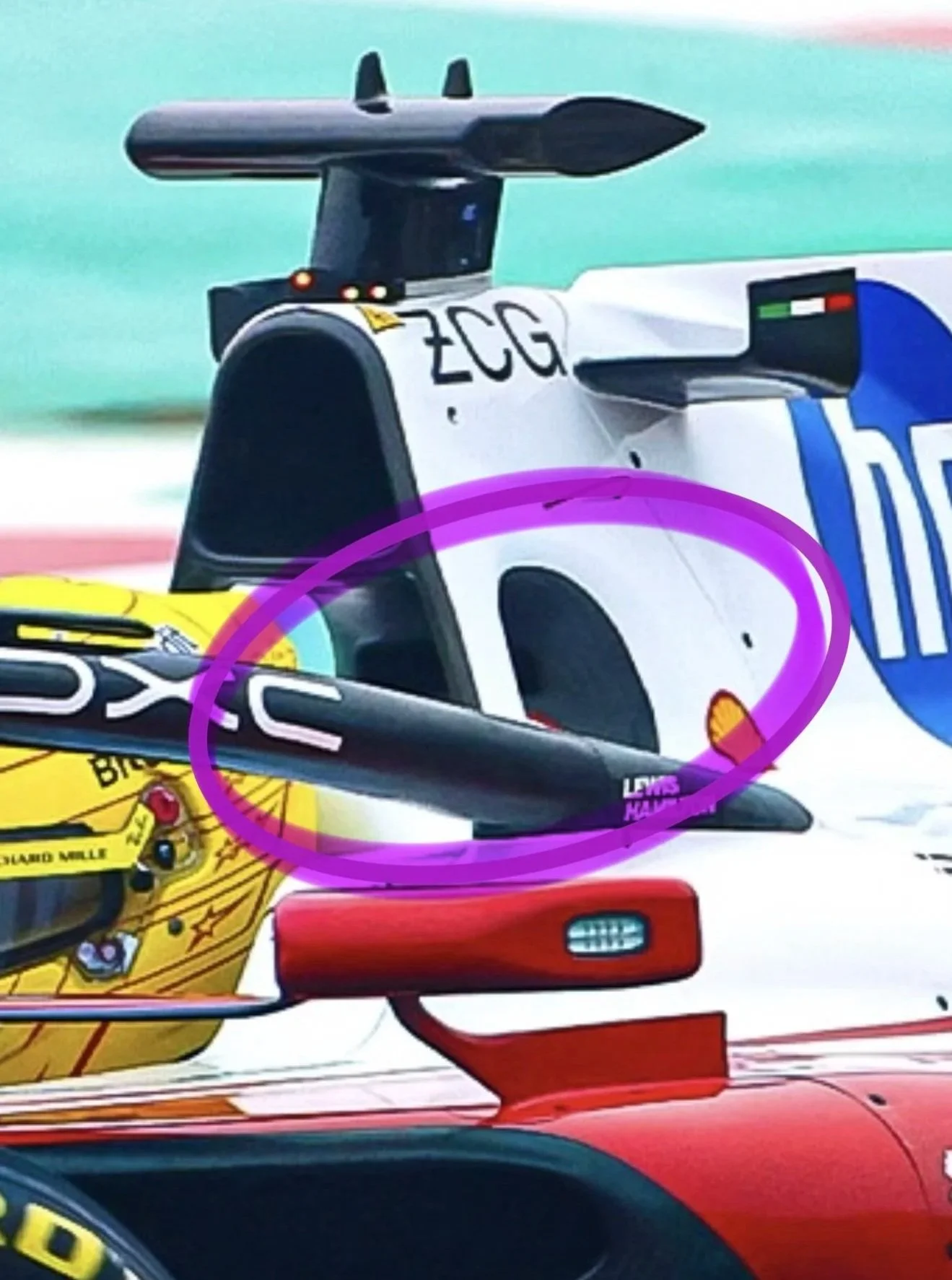
Less noticeable PU inlets on the SF-26
By increasing the MGU-K's output to 350kW, these inlets meet the 2026 regulations’ move to a more electrified hybrid power unit, which raises heat rejection requirements even with a smaller ICE.
These types of “shoulder inlets” we have seen before, such as on the RB20 in 2024.
The shark fin of the SF-26 waves goodbye to smooth geometry and opts for a “staircase” like design (see image below). The biggest reason behind this change could be explained by the vortices that are most predominantly shed by the fin when the car is going through yaw movements, such as medium-to-high speed corners. This design aims to break up one bigger vortex into smaller vortices, to reduce the negative impact of the airflow over the rear wing.
This new enlarged fin is now mandated by the new regs, and is definitely an area that needs do be managed, as the tip vortex generated by it migrates towards the rear of the car, destabilising the beam wings and active aero elements, through inducing separation and drag spikes. The stepped geometry generates a weaker vortex bunch, that diffuse rapidly via mutual cancellation. A similar phenomenon that we can also observe in the role of airplane wing tips.
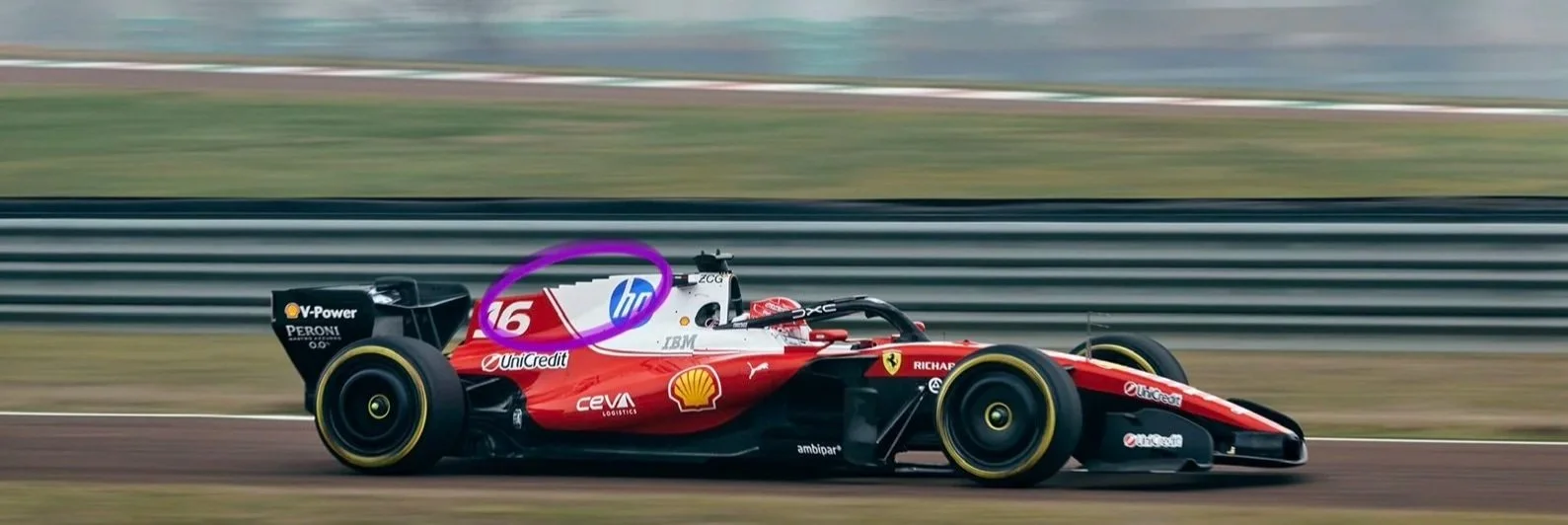
Charles Leclerc in the SF-26 in Fiorano
Ferrari seems like a team that has embraced the “systems problem” of 2026 rather than chasing a single gimmick. The SF-26 does not seem like the most revolutionary iteration of the 2026 regulations, but it for sure looks like they provide a greatly coherent package, providing a setup window that provides balance over different aero-modes and power usage. Though it is essential to keep in mind that Ferrari has officially said that they will bring a lot of new bits to the car by the time it hits the track at Melbourne, so I advise not to underestimate this first iteration.
All images © Ferrari S.p.A. / Ferrari Media Centre, used for editorial purposes only.