The All Awaited Debuts of the 2026 Barcelona Shakedown
The 2026 Barcelona shakedown wasn’t meant to blow our minds in terms of one-lap speeds and qualifying runs, but rather to show which teams’ projects looked most mature under the new regulations. Ferrari wrapped with the fastest time, Mercedes with the most distance covered, and Red Bull with more questions than answers, while Williams had no laps completed; they opted for a very thought-out, but risky testing strategy. This post summarizes all teams’ first week of running, including those who haven’t even rolled out of the garage.
Mercedes – Distance as Competitive Advantage
Mercedes wasn’t going for glory runs, but rather for consistency and data acquisition, ramping up 500 laps over 3 days – the most of any team. This approach established the W17 as the baseline from a reliability and correlation standpoint, even if we know very little about its full performance.
Quiet optimism radiated from the driver’s seat. Andrea Kimi Antonelli called his first long runs “very interesting”, then later summarised the shakedown week as “a pretty good shakedown”, underlining the distance they managed to run on track and how much they managed to learn from the car.
George Russell talked of moving towards “more qualifying-style runs” by the final day, suggesting the team felt confident enough in the fundamentals to begin probing the upper end of the operating window.
From a technical standpoint, the most important thing to highlight is not a recognisable innovation, but rather the robustness of the integration of all the new elements. The regulations brought changes to the PU, active aero, drag, and downforce, and if the harmony of these elements is as efficient as we have seen on the Mercedes, that provides the team a seriously great asset. The only negative element of Mercedes’ shakedown is the uncertainty on the power unit compression ratio trick, which has been reported by a plethora of teams, and may still require immense changes to be made before the first race in Melbourne.
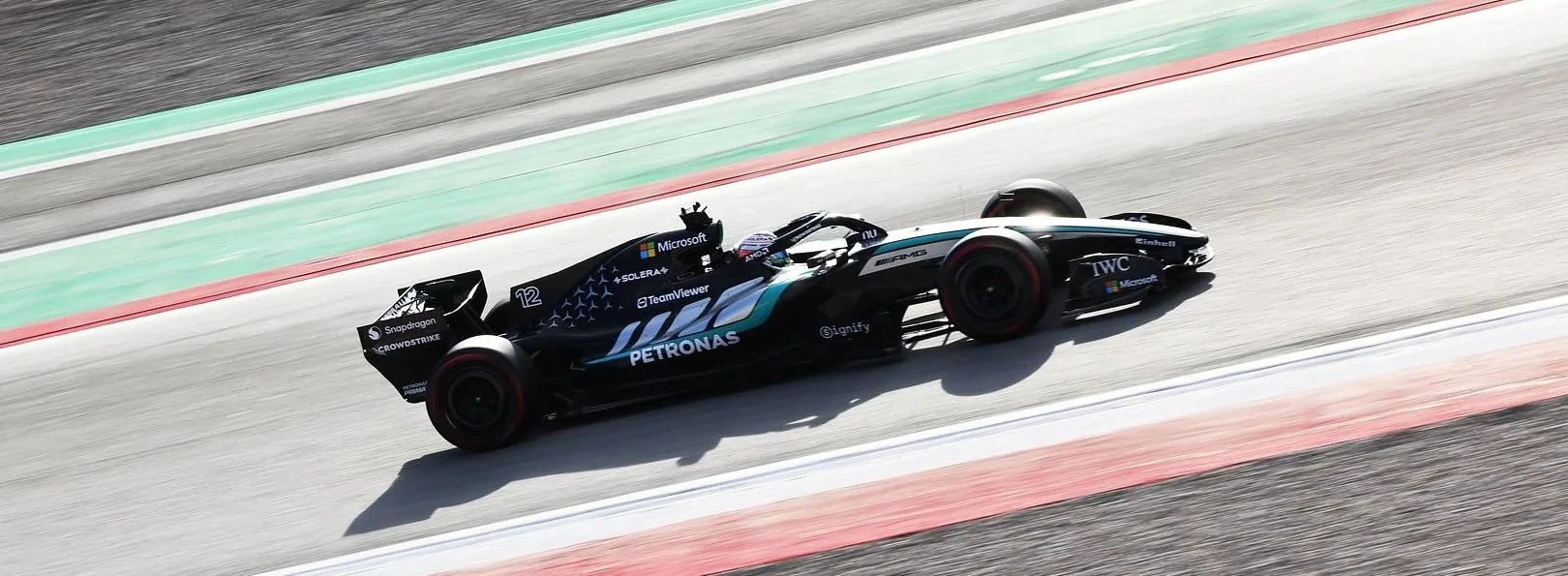
Photo: Image © Mercedes-AMG F1 Team, Steve Etherington (editorial use).
Ferrari – The Fastest, but Still Under the Radar
On paper, it was Ferrari who “won” the shakedown; Lewis Hamilton wrapped the team’s final session with the week’s fastest time, all the while the SF-26 finished its planned run programme through rain and shine. Charles Leclerc rated his day “great again”, highlighting they finished the run plan with no issues and achieved everything they hoped to, including some runs with more performance, as the baseline was strong.
Ferrari’s work seemingly concentrated highly on understanding the relationship of balance between the PU and active aero elements. During Leclerc’s run in the wet, Ferrari experimented with partial active aero, which is legislated by the FIA in slippery conditions. In order not to cause major balance changes all at once, the FIA mandated that only the front wing shall be open during these environments, so the sudden loss of downforce does not upset the car too much, all the while still easing the pressure on the PU with the added drag. This fine-tuning is exactly what the new regulations require.
The positives include reliability, as Ferrari was the second team behind Mercedes in terms of laps completed, amounting to 442. Furthermore, the choice to experiment with all three aero specifications told us that Ferrari isn’t just fast but has the freedom to test out all settings. As the shakedown is the first outing of these cars, there really aren’t a lot of negatives to highlight, as there were no issues plaguing the team.
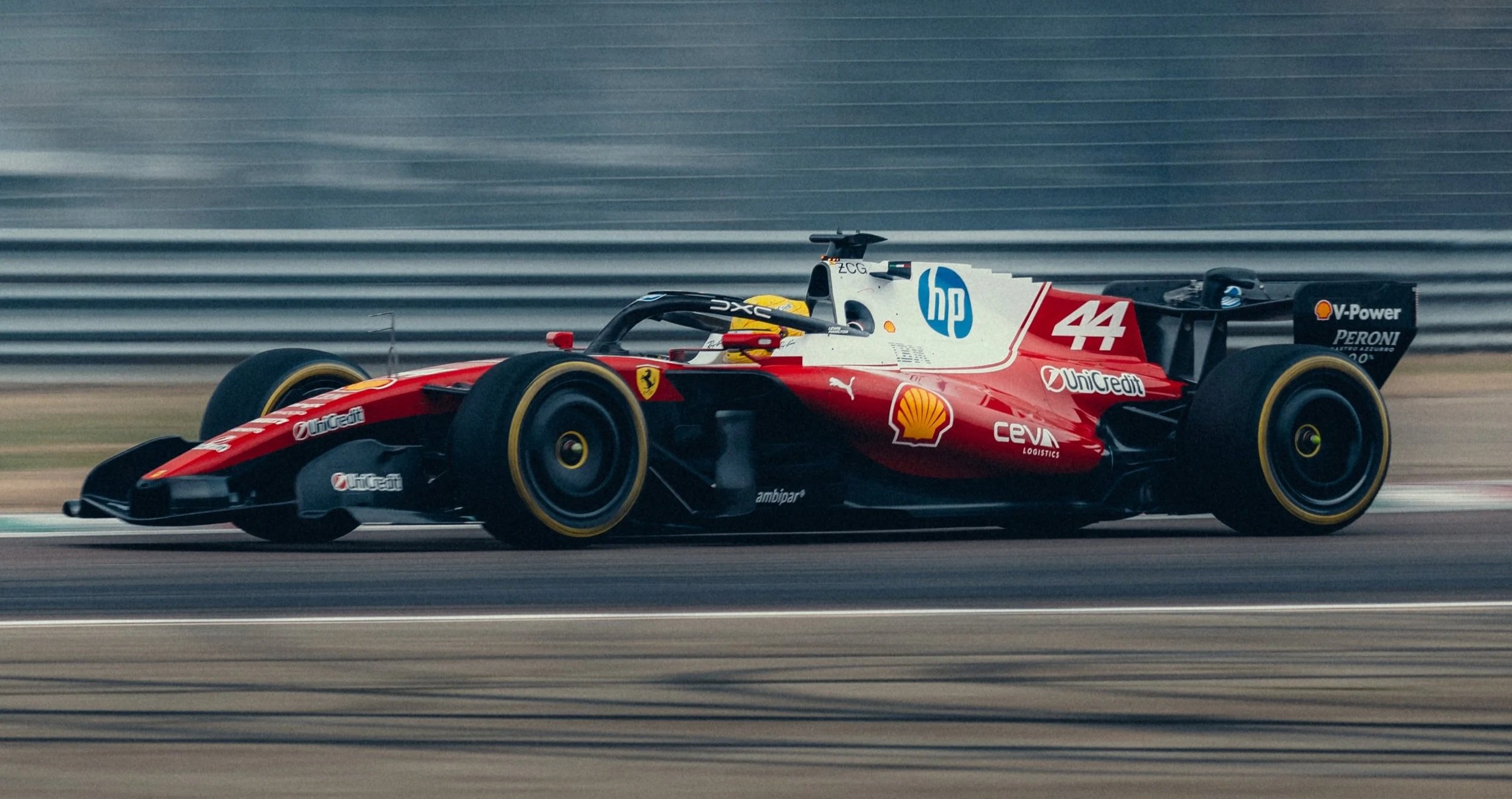
Image © Ferrari S.p.A. / Ferrari Media Centre, used for editorial purposes only.
Red Bull – Quiet, Calm and Difficult to Judge
Red Bull’s weekend was peculiarly grounded. The team ran through all three allocated days, though wet weather conditions and a more cautious run plan disallowed the drawing of any conclusions. Headlines were minimal; the biggest news was always how much we are kept in the dark regarding their performance.
Max Verstappen spoke honestly of balance and how in the early days they were unable to rack up laps, but after making strides towards the final days, his evaluation proved positive, especially praising the overall start to this year’s regulation set. The Red Bull seems to offer good balance as its opposition, though no conclusions could be drawn about race performance.
From an outside perspective, the key question to be answered is whether Red Bull’s new partnership with Ford on their PU will bear fruit or at least be on par with Mercedes and Ferrari. Initial reports suggest the Austrian team may be lacking in energy efficiency. It is firmly expected that Red Bull will be greatly competitive in the development race throughout the season, so expect them to trouble the front-runners.
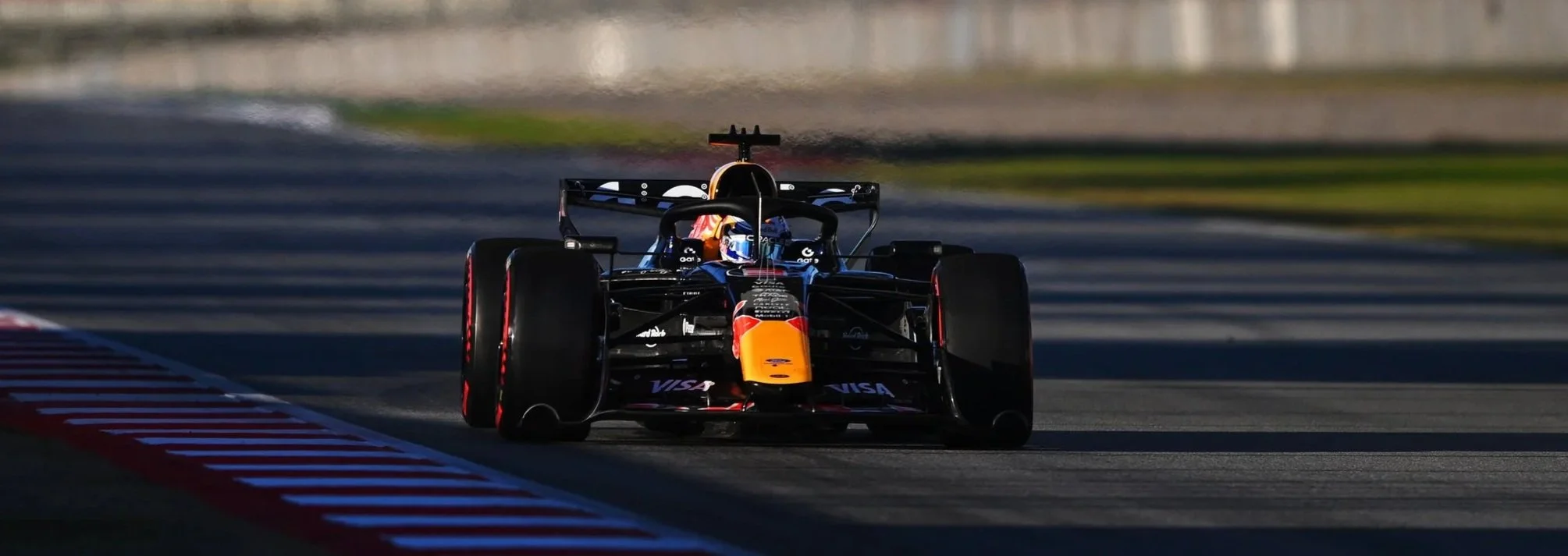
Red Bull RB22 on track during the 2026 Barcelona shakedown. Image © Oracle Red Bull Racing / Red Bull Content Pool, used for editorial purposes only.
McLaren – Late Appearance, Big Advantage
McLaren decided to join the shakedown as late as possible, only running on the last three days, from Wednesday to Friday, to maximise the early allocation for development and validation of the MCL40. This meant the team did fewer laps than Mercedes or Ferrari, but allowed them to hit the ground running and achieve valuable data gathering from the get-go.
The feedback given by the drivers told us plenty. Oscar Piastri openly stated that the first days consisted of ironing out small issues, hinting at his problems with the fuel system. Despite the ‘weaker’ performance from the team, they are listed behind Mercedes and Ferrari after initial evaluations. This shows long-term potential, especially after they’ve sorted fuel and PU issues. The main setback they encountered after the shakedown is that some tests will have to be performed during the Bahrain testing, which may make their future run plans challenging time-wise.
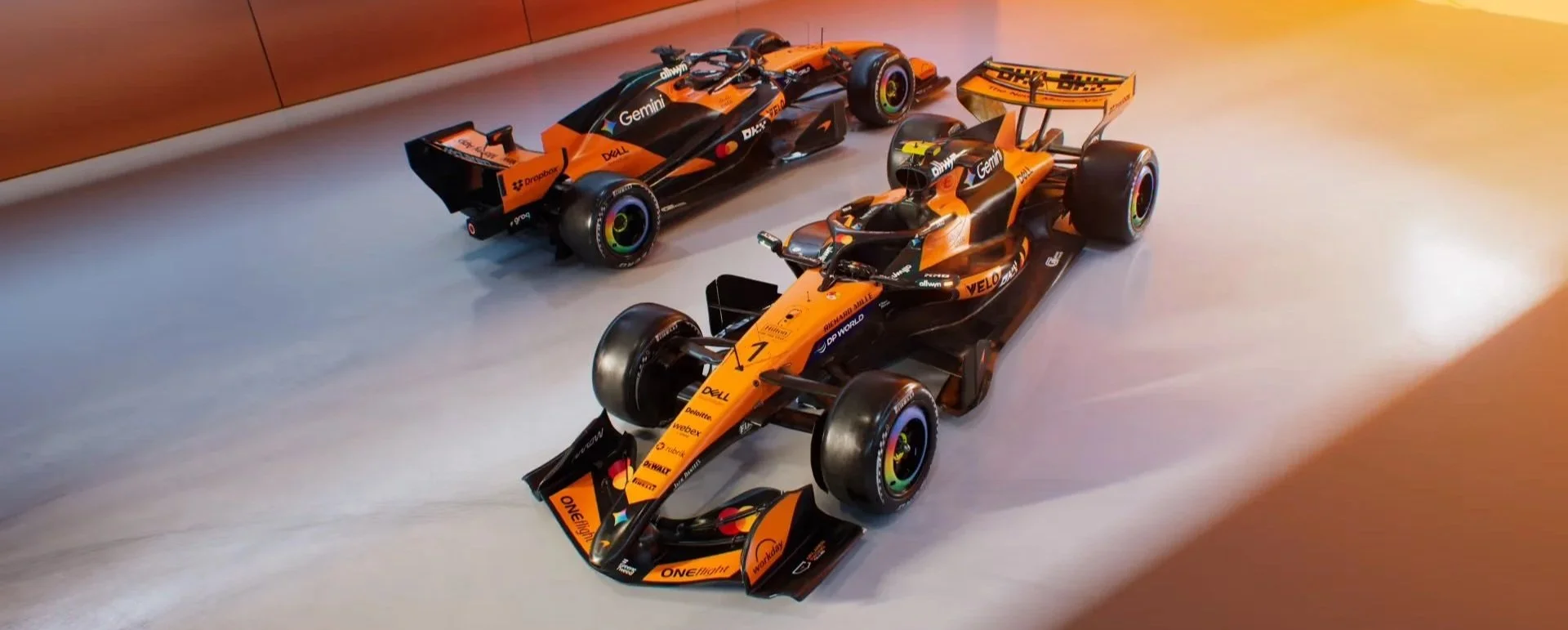
McLaren MCL40 press image from the 2026 Barcelona shakedown. Image © McLaren Formula 1 Team / Media Hub, used for editorial purposes only.
Aston Martin – Radical Concept, Fragile Start
If there was anything in Barcelona that stirred interest in the paddock from an aesthetics perspective, it was the AMR26. The car rolled out of the garage with an exposed carbon fibre look, with very distinct sidepods and an engine cover. The sidepods have a sizeable undercut, emphasising aggressive downwash optimisation, that aims to direct airflow aggressively towards the floor and diffuser.
The new regulations aim to limit teams, and “force” them into adapting an “inwash” philosophy, which in short, means the air flowing over the car is channeled inwards towards the main aerodynamic elements. The reasoning for this change is mainly to lower the dirty air produced by the cars, striving to make racing better and allow cars to follow more closely. Though this philosophy is not ideal for the teams, as the incoming flow is quite disruptive, especially if we look at underfloor downforce generation. This design aims to channel high-velocity air between the rear wheels and diffuser wall to create low pressure, speeding up exhaust flow and amplifying overall ground-effect downforce. The AMR26 demonstrates Adrian Newey’s Midas touch, which differs aggressively compared to other, safer concepts.
On the other hand, the car’s on-track performance proved fragile. Lance Stroll only managed 5 laps on his first outing before he stopped on track with a suspected PU issue, bringing out the red flags. Fernando Alonso in the afternoon session went smoother than the morning hours, though it wasn’t enough to compensate for the missed laps. This left Aston with a car that is clearly full of potential, but hasn’t yet proved it can surprise a representative full race distance.
The innovation direction is clear; Aston looks to have adopted a very coherent and aerodynamically aggressive philosophy. From a technical standpoint, it’s very risky, but it could prove immensely beneficial later on if the design bears fruit, which Aston hopes will prove to be the case, as in the cost-cap era of Formula One, changes cannot be committed to so easily.
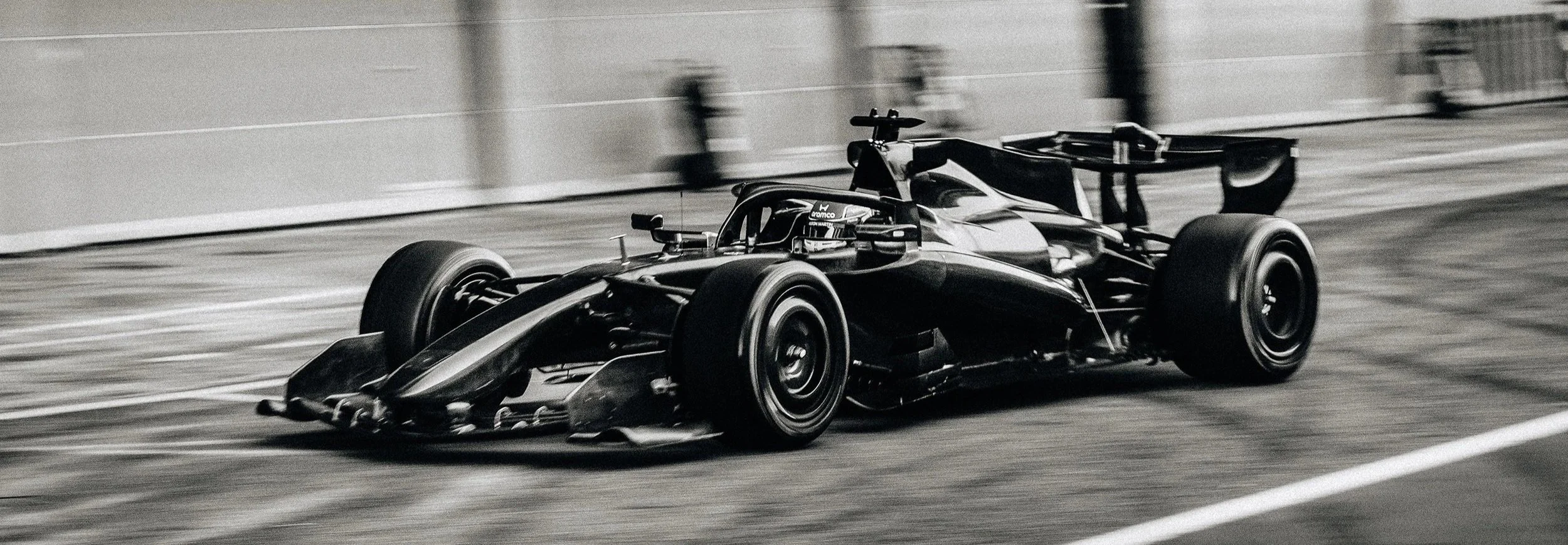
Aston Martin AMR26 in camouflage during the 2026 Barcelona shakedown. Image © Aston Martin Aramco Formula One Team / Media Centre, used for editorial purposes only.
Audi – New Entry, Systematic Thinking
Barcelona was Audi’s first real public test as a distinct manufacturer in F1. Raw performance data did not leave us in awe, but over the three days, the team increasingly showed better and better reliability and found its footing, leaving Barcelona with respectable results.
Gabriel Bortoleto, who is now entering his second year in the sport, summarised it clearly, that the shakedown “literally means that they get the car on track and test it if everything works”, and that the team “is ready for any such problems” in this phase of the season.
The data sheet places Audi towards the back of the pack, but if we consider mileage and issues, they weren’t the “worst” newcomers, and their initial lack of performance comes from a not fully optimised package, rather than a lack of overall pace. In Audi’s situation, joining the sport in a new regulation set with their own PU, a boring shakedown is often exactly what they need. It provides a clean sheet for improvements, rather than a chaotic and urgent need for improvement.
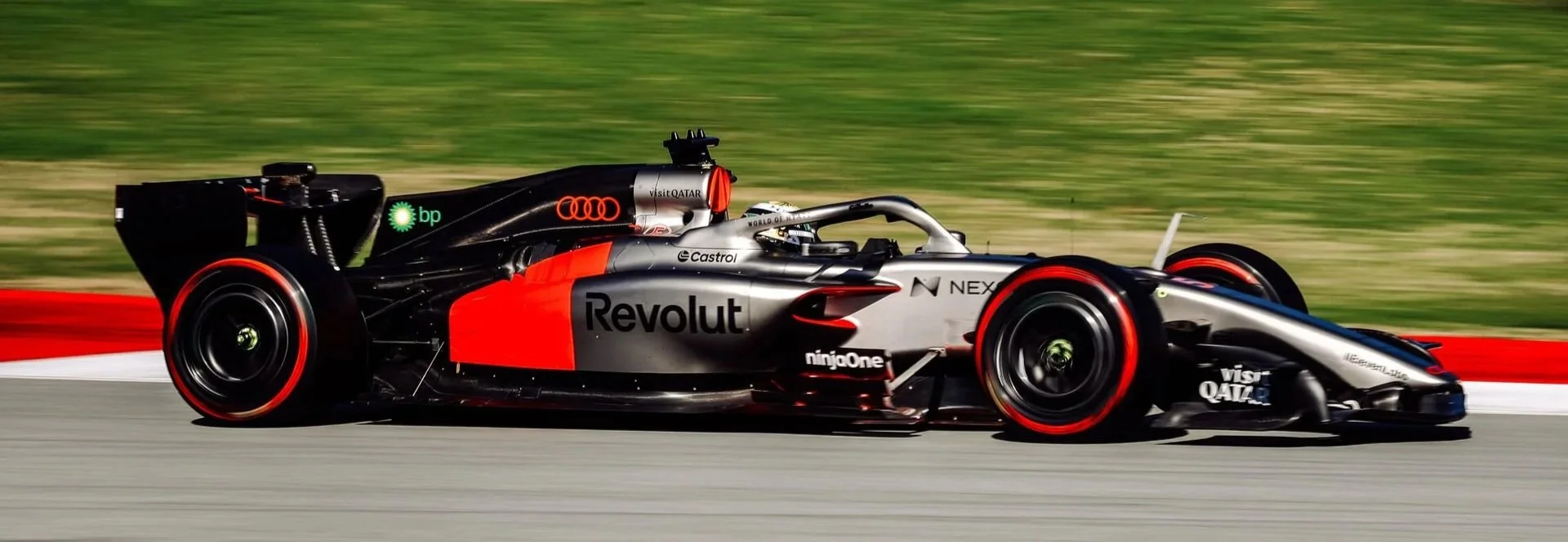
Audi R26 on track during the 2026 Barcelona shakedown. Image © AUDI AG / Audi Revolut F1® Team Content Hub, used for editorial purposes only.
Cadillac – First Steps, Tame, but Important
Cadillac’s new F1 project took its first steps in Barcelona under the control of experienced drivers Valtteri Bottas and Sergio Pérez, concentrating mostly on initialisation and supervision of standard procedures, rather than high mileage. Their programme was purposefully conservative, but that didn’t mean it was less meaningful.
Bottas’ verdict after being asked about testing was “very valuable” and called it a “milestone” and the “issue-solving phase” of the season. This wording is important, as Cadillac does not pretend that they are ready to fight at the front; rather, they strive to stabilise power unit optimisation and package coordination within the team.
According to the data sheet, Cadillac appears at the rear end of the pecking order with Audi and Aston, but after analysing their completed laps and sorting correlation, their situation is far from catastrophic. Similarly to Audi, their risk lies in the distribution of resources. If some issues are sustained during Bahrain testing, that may eat away at their allocated development and financial limit, which would be better spent on performance improvements rather than damage limitation.
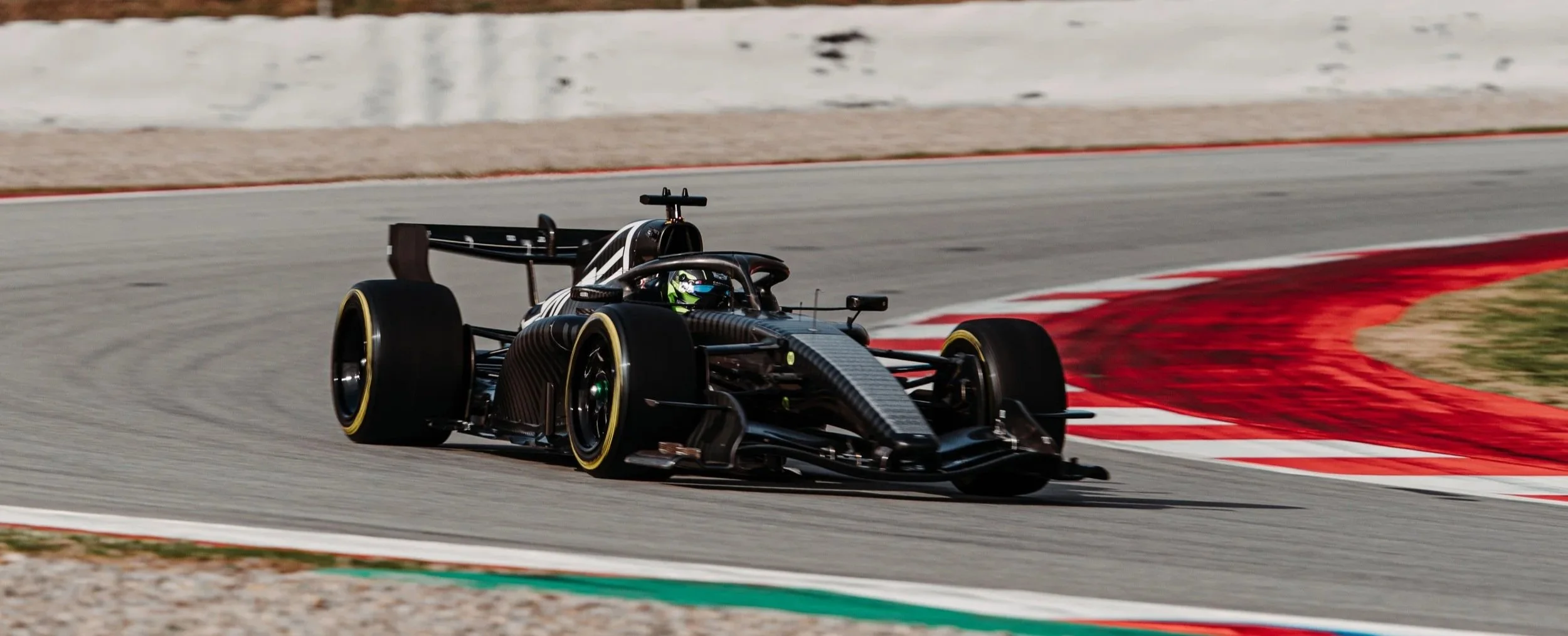
Cadillac’s 2026 Formula 1 car on track during the Barcelona shakedown. Image © Cadillac F1 Team / Official Media Centre, used for editorial purposes only.
Haas – Quiet, but Competent Mileage
Haas had one of the least jaw-dropping but functionally most impressive weeks in Barcelona. Esteban Ocon, solely on the first day, tallied 154 laps, which was the most of any team on the opening day. This proved that the VF-26 had impressive reliability from the day of commencement.
Throughout the entire shakedown, and after data sorting, Haas was just over two seconds away from the front runners. This performance placed them in the lower end of the midfield, but didn’t automatically translate into worries. Even more important is that the main goal for the team was to test the system and correlation data, and instead of glory runs on soft tyres, they prioritised ride-height testing, flap angle optimisation, and energy management.
For a smaller team operating with a limited budget, this was a rational approach. Every covered kilometre lessens the chance of expensive failures, and a simple, more stable platform provides opportunities for aerodynamic improvement, without risking upsetting the whole package.
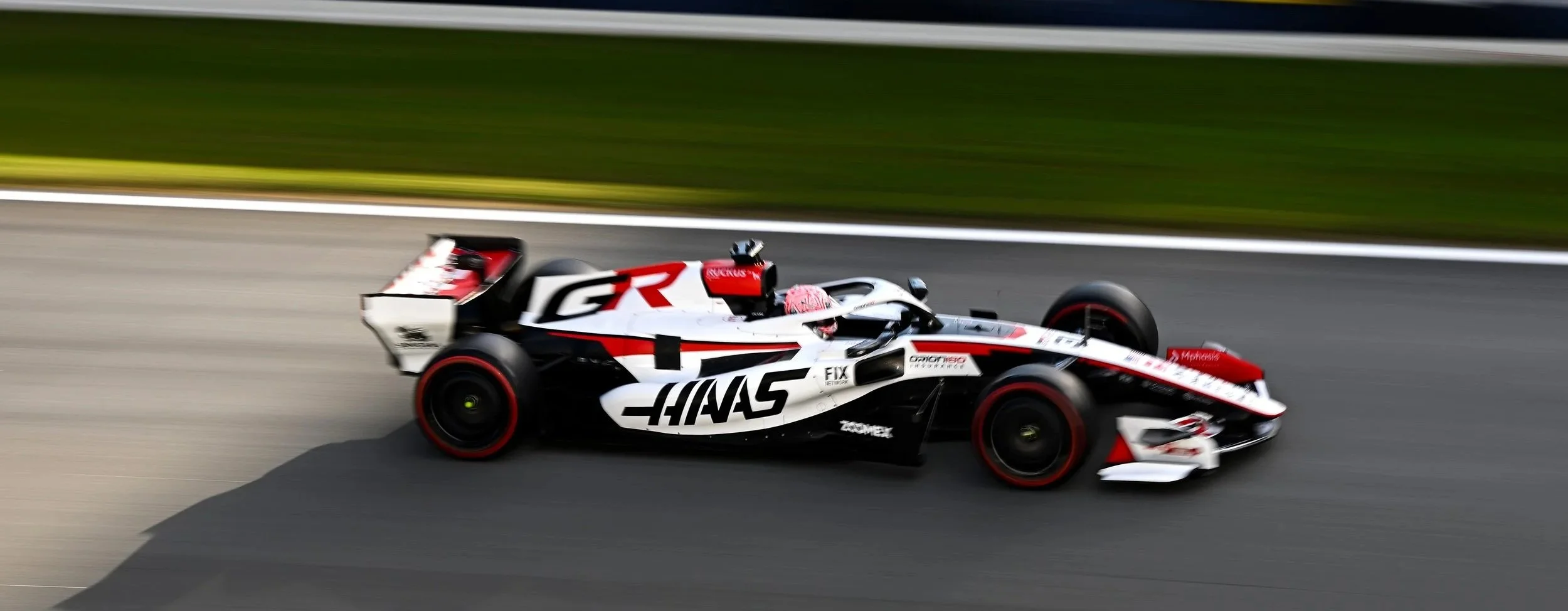
Haas VF‑26 on track during the 2026 Barcelona shakedown. Image © MoneyGram Haas F1 Team / Media Centre, used for editorial purposes only.
Alpine – Careful Launch with new PU Partner
Alpine arrived in Barcelona carrying the baggage of 2025, having effectively sacrificed last season to prepare for this ruleset and, crucially, having switched away from their own power unit to a new supplier, Mercedes. This meant that Barcelona wasn’t just a chassis test, but the first real outing of the majorly overhauled architecture and car philosophy, and the numbers were encouraging.
Alpine concluded the shakedown with 379 laps completed, which comfortably sits near the top of the table in terms of running distance, and was only 1.5 seconds away from the fastest time. Furthermore, the feedback provided by the drivers wasn’t anything atrocious, which mirrors the fact that the car is living up to expectations and didn’t bring any surprises.
From a technical and business perspective, this is exactly what Alpine needed. After in-team politics and a large personnel overhaul ate away at the team’s resources, a solid and uneventful shakedown with a new PU supplier, the optimised package proves to the team that their efforts were not in vain, and they can now focus on improving on-track performance.
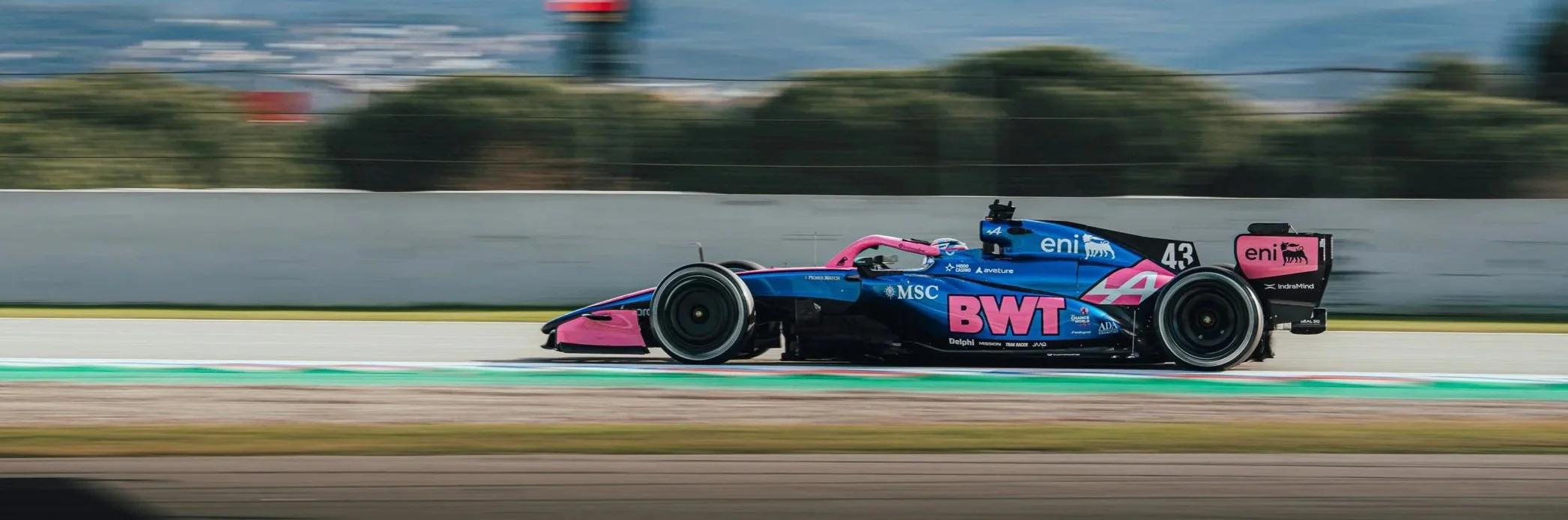
Alpine A526 on track during the 2026 Barcelona shakedown. Image © BWT Alpine F1 Team / Media Hub, used for editorial purposes only.
Racing Bulls – Data Factory for the Red Bull Ecosystem
Racing Bulls set a clear goal: rack up as many laps as possible on shakedown week. Liam Lawson conducted most of the running and was satisfied with the distance covered. From a reliability standpoint, he rated the test “pretty strong,” but admitted that, in terms of pure performance, “we don’t know where anybody else is.”
On the timing sheets, RB was just over two seconds off the pace, close to matching Haas. At this stage of the season, we shouldn’t draw hard conclusions about these times because of different run plans, but even this deficit doesn’t seem detrimental in the slightest. Moreover, being a sister team, it was a crucial aspect to understand how much run data they can contribute to the ecosystem, to help with simulator correlation and setup configurations.
The advantage is clear: a reliable, data-rich test helps them and Red Bull in fine-tuning their 2026 challengers, with low added cost. What RB should be wary of is not becoming a designated testing environment, as at a certain point, they ought to translate the gathered data and knowledge into their own car, which can lead to valuable points in the midfield.
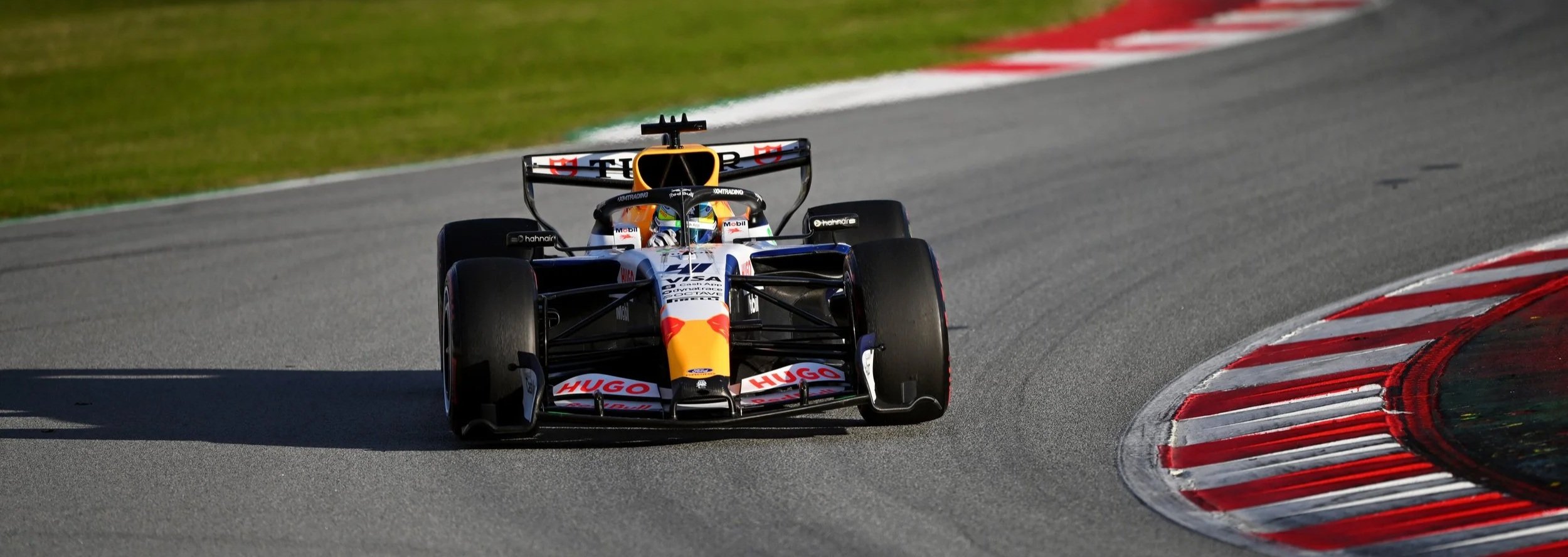
VCARB 03 on track during the 2026 Barcelona shakedown. Image © Visa Cash App RB Formula One Team / Media Centre, used for editorial purposes only.
Williams – The Team That Didn’t Turn a Wheel
Williams is a one-off case: they’ve knowingly decided to miss all 5 days of the shakedown, claiming that their goal was to avoid putting the FW48 on track in an incomplete manner. In an era where time spent on track is limited but is as crucial as ever, this is a bold but risky call to make.
In official statements, the team has said they would instead run “a series of tests including a VTT (Virtual Track Testing) programme” with the 2026 car to prepare for Bahrain and the season opener, leaning heavily on simulation and private running. This decision is intertwined with Williams’s failed attempts to pass the FIA’s crash on several occasions. This proved a clear setback for Williams and affected their plans to attend the Barcelona shakedown, so they opted for virtual simulations.
From a business and engineering standpoint, the logic is clear as day. The team’s absence from Barcelona means they miss out on physical data acquisition, and the emergence of any issues that may only reveal themselves on track, such as the porpoising issue in 2022. Though, as we’ve heard from reports, it may well also mean they avoided the potential issues that plagued the early versions of the car, and by the time they arrive in Bahrain in February, they’ll possess a more mature version of the FW48.
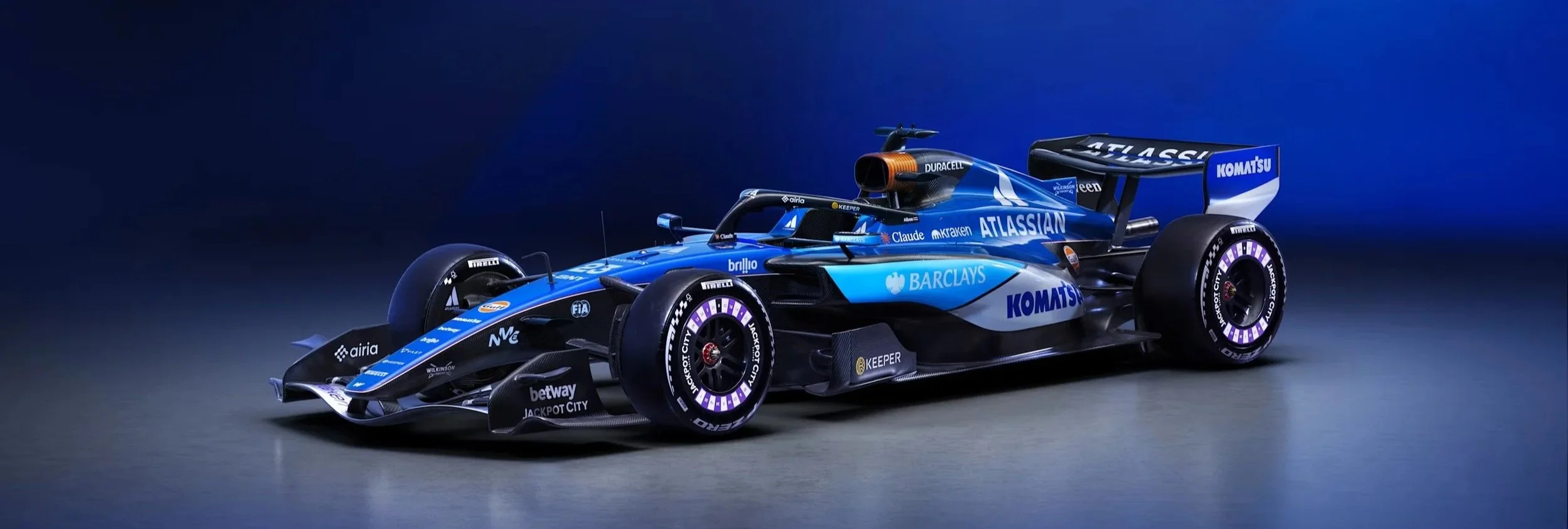
Williams FW48 in the studio during the 2026 livery reveal. Image © Williams Racing / Media Centre, used for editorial purposes only.